
Visual summary
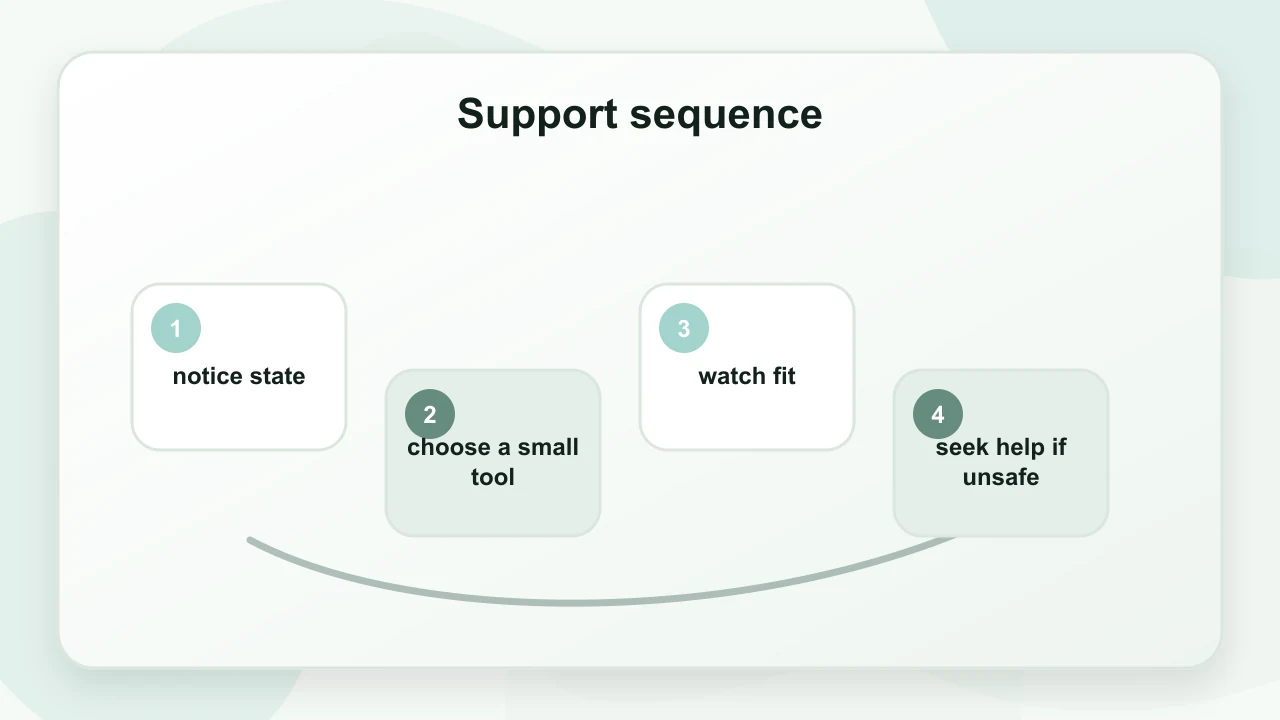
The infographic summarizes the article as notice state, choose a small tool, watch fit, seek help if unsafe. It is a reading aid only and does not add new claims beyond the article.
Nervous system regulation is a popular term for helping the body shift between activation, recovery, focus, and rest in a flexible way. It is not a formal diagnosis, a one-time “reset,” or proof that every uncomfortable feeling comes from a damaged nervous system.
What regulation actually means
The autonomic nervous system helps manage heart rate, breathing, digestion, temperature, and stress responses. The sympathetic branch supports mobilization; the parasympathetic branch supports rest and recovery. Healthy regulation does not mean being calm all the time. It means responding to demands and returning toward baseline when the demand has passed.
Signs of high or low activation
High activation may include:
- racing heart;
- muscle tension;
- restlessness;
- rapid breathing;
- irritability;
- hypervigilance;
- difficulty sleeping.
Low-energy or shutdown-like states may include:
- numbness;
- fatigue;
- slowed thinking;
- withdrawal;
- heaviness;
- difficulty initiating action.
These experiences are not specific diagnoses. Medical conditions, medication effects, sleep loss, substance use, trauma, anxiety disorders, depression, and other factors can overlap.
Nervous system regulation exercises that may help
Slow, comfortable breathing
A slightly longer exhale may reduce arousal for some people. Avoid forcing very deep breaths, which can cause dizziness or increase panic.
Try breathing gently through the nose, allowing the exhale to last a little longer than the inhale for one to three minutes.
Grounding
Name five things you see, four you feel, three you hear, two you smell, and one you taste. Grounding directs attention toward the present environment.
Progressive muscle relaxation
Tense and release muscle groups gradually. This may help people notice and reduce physical tension.
Rhythmic movement
Walking, rocking, stretching, dancing, or another repetitive movement can provide predictable sensory input.
Temperature and sensory cues
A cool cloth, warm shower, weighted blanket, familiar scent, or quiet lighting may help some people. Avoid extreme cold exposure or other intense “hacks,” especially with cardiovascular or medical conditions.
Social regulation
A calm voice, trusted person, supportive animal, or familiar environment can reduce perceived threat. Regulation is not always an individual task.
Foundations matter more than hacks
The most reliable support often comes from:
- consistent sleep;
- regular meals;
- physical activity;
- reduced caffeine or alcohol when they worsen symptoms;
- predictable routines;
- time outdoors;
- supportive relationships;
- appropriate therapy or medication.
A five-minute technique is less likely to help when the person is chronically sleep-deprived, unsafe, intoxicated, withdrawing from substances, or experiencing an untreated medical problem.
What does not hold up well
Be cautious of claims that:
- one exercise permanently resets the nervous system;
- all mental illness is “dysregulation”;
- shaking, cold plunges, or vagus-nerve hacks cure trauma;
- a wearable can diagnose emotional regulation;
- symptoms prove hidden trauma;
- therapy or medication are unnecessary if regulation skills are used.
The language of nervous system regulation can be useful, but it becomes misleading when it replaces diagnosis, evidence, or individualized care.
Why calming exercises sometimes backfire
Relaxation practices can occasionally increase anxiety, intrusive thoughts, dissociation, or fear of losing control. Trauma survivors may feel less safe when focusing inward.
When this happens:
- stop the exercise;
- orient to the room;
- keep the eyes open;
- use movement rather than stillness;
- shorten the practice;
- work with a trauma-informed clinician if needed.
When to seek professional care
Get medical or mental-health help for persistent panic, severe insomnia, fainting, chest pain, major functional decline, substance withdrawal, psychosis, mania, self-harm, or suicidal thinking.
In the United States, call or text 988 for crisis support. Call emergency services when there is immediate danger or a medical emergency.
Practical takeaway
Nervous system regulation is not about eliminating all stress. Build flexibility through sleep, movement, regular meals, grounding, comfortable breathing, relaxation, and safe connection. Use techniques as support—not as proof of a diagnosis or replacement for treatment.
See Emotional Regulation Techniques and Deep Breathing for Anxiety.
Sources
- National Institute of Mental Health — Anxiety Disorders
- American Psychological Association — Anxiety
- NCCIH — Relaxation Techniques: What You Need To Know
- NCCIH — Anxiety and Complementary Health Approaches