
Visual summary
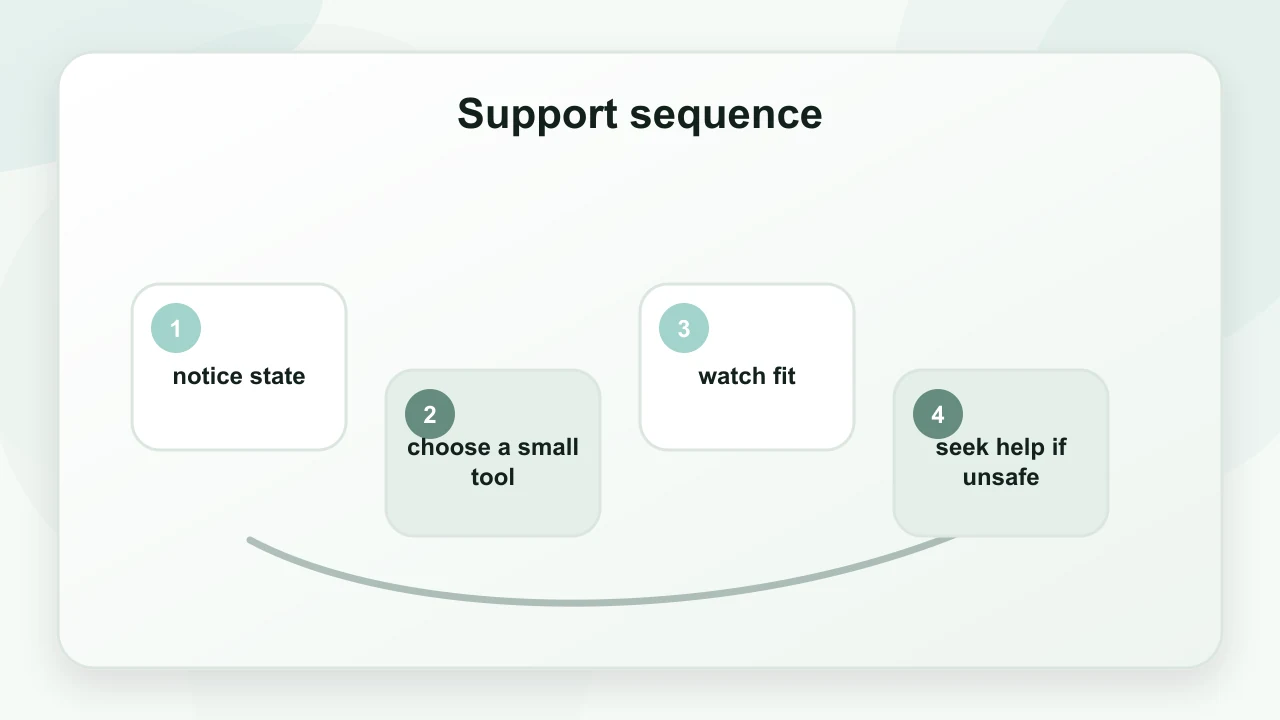
The infographic summarizes the article as notice state, choose a small tool, watch fit, seek help if unsafe. It is a reading aid only and does not add new claims beyond the article.
Breathing exercises for anxiety are structured patterns that may help slow rapid breathing, reduce physical tension, and provide a stable focus during stress. Different exercises suit different people. The most useful method is usually the one that feels comfortable, simple, and easy to stop.
This page is a practical exercise library. For a detailed explanation of why “deep” breathing can sometimes backfire, see Deep Breathing for Anxiety.
Before you begin
Use these safeguards:
- Sit or stand where you are unlikely to fall.
- Loosen anything restrictive around the chest or neck.
- Keep the breath comfortable rather than maximal.
- Stop if you become dizzy, numb, faint, or more panicked.
- Return to normal breathing before trying another method.
- Seek medical evaluation for new, severe, or unexplained symptoms.
You do not need to inhale a large amount of air. Many anxiety breathing exercises work by reducing speed and effort.
1. Gentle longer-exhale breathing
Best for: general tension or mild anxiety.
- Inhale gently for three or four seconds.
- Exhale comfortably for four to six seconds.
- Repeat for one to three minutes.
Shorten the count if you feel air hunger. The exhale should be longer only by a comfortable amount.
2. Paced breathing with a visual anchor
Best for: people whose thoughts wander during breathing practice.
- Choose a rectangular object.
- Follow one side with your eyes while inhaling.
- Follow the longer side while exhaling.
- Continue around the shape.
This combines breathing with external visual grounding. It may feel safer than closing the eyes.
3. Pursed-lip breathing
Best for: slowing an overly fast exhale.
- Inhale gently through the nose.
- Purse the lips as though cooling soup.
- Exhale slowly without forcing.
- Repeat several times.
People with respiratory conditions should use clinician-recommended techniques rather than assuming a generic exercise is appropriate.
4. Counted breathing without holds
Best for: people who like structure but dislike breath-holding.
Try:
- inhale for three;
- exhale for four;
- repeat five to ten times.
The numbers are adjustable. If counting creates pressure, use words such as “in” and “out” instead.
5. Breathing plus five-senses grounding
Best for: panic, rumination, or too much inward focus.
Take one gentle breath, then identify:
- one thing you see;
- one thing you hear;
- one thing you feel.
Repeat the sequence. The goal is not perfect calm; it is reconnecting with the current environment.
What about box breathing?
Box breathing commonly uses equal counts for inhale, hold, exhale, and hold. Some people find it focusing. Others feel trapped by breath holds, especially during panic.
Modify it by removing the holds:
- inhale for four;
- exhale for four or five.
There is no requirement to use the original pattern.
What about the 4-7-8 method?
A long seven-count hold and eight-count exhale may be too demanding for beginners or anxious people. If you try it, use shorter comfortable counts. Do not push through dizziness or distress.
How often should you practice?
Try one method for one or two minutes once or twice daily when relatively calm. After several days, decide:
- Did it feel easier?
- Did it reduce physical tension?
- Did it help you return to an activity?
- Did it increase body monitoring or fear?
Keep only the exercises that are useful.
When breathing exercises make anxiety worse
Possible reasons include:
- inhaling too deeply;
- breathing too quickly;
- long breath holds;
- focusing intensely on bodily sensations;
- trauma-related discomfort with closing the eyes;
- fear that the exercise “must” work;
- an underlying medical issue.
Stop, open the eyes, orient to the room, place the feet firmly down, and use movement or grounding instead.
Breathing exercises are support, not full treatment
Breathing exercises may help manage moments of activation. They do not by themselves address:
- persistent avoidance;
- panic disorder;
- trauma;
- obsessive-compulsive symptoms;
- substance use;
- unsafe relationships;
- medical causes of breathlessness;
- suicidal thinking.
Evidence-based psychotherapy, medication, medical assessment, and social support may be needed.
Practical takeaway
Choose one breathing exercise for anxiety and make it easy:
- Keep the inhale gentle.
- Slow the exhale.
- Avoid uncomfortable holds.
- Practice briefly.
- Pair it with an external grounding cue.
- Stop if symptoms worsen.
For broader context, read Nervous System Regulation and Grounding Techniques for Anxiety.
Sources
- NCCIH - Relaxation Techniques: What You Need To Know
- NCCIH - Anxiety and Complementary Health Approaches
- NIMH - Anxiety Disorders