
Visual summary
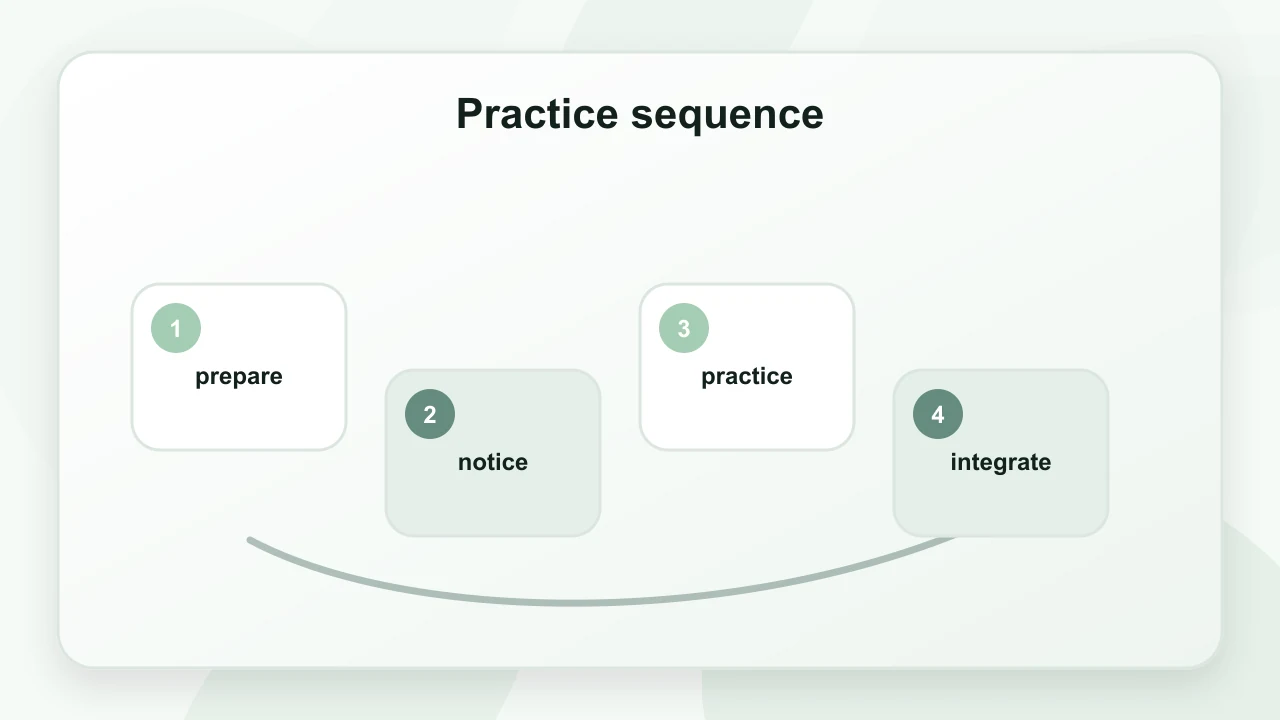
The infographic summarizes the article as prepare, notice, practice, integrate. It is a reading aid only and does not add new claims beyond the article.
Progressive muscle relaxation is a structured technique in which you gently tense and then release muscle groups one at a time. It was developed from the work of physician Edmund Jacobson and is commonly used to increase awareness of tension and support relaxation.
The practice may help some people with stress, anxiety, sleep difficulty, or muscle tension. It should feel controlled and comfortable. Strong contractions, painful positions, or long sessions are unnecessary.
How progressive muscle relaxation works
Stress can produce muscle tension that becomes so familiar it is difficult to notice. Progressive muscle relaxation creates a contrast between tension and release.
The benefit may come from:
- focusing attention;
- reducing muscle effort;
- slowing the pace of activity;
- improving awareness of bodily tension;
- pairing release with comfortable breathing;
- creating a predictable wind-down routine.
Progressive muscle relaxation: how to begin
Choose a quiet setting where you can sit or lie comfortably. Keep the eyes open if closing them feels unsafe.
For each muscle group:
- Notice the current level of tension.
- Gently tense for about three to five seconds.
- Release without forcing.
- Notice the difference for 10–15 seconds.
- Move to the next area.
Use only mild to moderate effort.
A step-by-step sequence
Hands and forearms
Make a gentle fist, then release.
Upper arms
Bend the elbows slightly and tense the arms, then release.
Shoulders
Lift the shoulders toward the ears without straining, then let them drop.
Face
Gently tighten the forehead or jaw, then soften. Do not clench hard.
Chest and abdomen
Take a comfortable breath and lightly tighten the abdomen, then release. Avoid breath-holding if it feels uncomfortable.
Hips and thighs
Press the thighs together gently or tighten the upper legs, then release.
Lower legs
Point or flex the feet gently, then release. Avoid cramping.
Whole-body pause
Notice the body without trying to make it completely relaxed.
An abbreviated version
When time is limited, combine areas:
- Arms and hands.
- Face and shoulders.
- Chest and abdomen.
- Hips and legs.
The abbreviated version may take three to five minutes.
Progressive muscle relaxation for sleep
Use the technique as part of a consistent wind-down rather than as a test you must pass before sleep.
Helpful adjustments:
- use very light tension;
- stop if the practice becomes effortful;
- avoid checking the clock;
- pair it with dim light;
- finish by returning to ordinary breathing.
Persistent insomnia may require structured treatment such as cognitive behavioral therapy for insomnia.
Progressive muscle relaxation for anxiety
PMR may reduce physical tension during general anxiety. During panic, a long inward-focused practice may feel overwhelming. Use fewer muscle groups, keep the eyes open, or switch to external grounding.
Who should modify or avoid the technique?
Speak with a clinician before using PMR when you have:
- acute injury;
- severe chronic pain;
- recent surgery;
- significant muscle or joint disease;
- neurological conditions;
- recurrent cramping;
- cardiovascular concerns affected by straining;
- trauma symptoms triggered by body focus.
Skip painful areas rather than pushing through.
Common mistakes
Tensing too hard
More effort does not create more benefit.
Holding the breath
Breathe normally unless a clinician has instructed otherwise.
Trying to force relaxation
The goal is awareness and release, not complete control of the body.
Practicing through pain
Pain is a signal to stop or modify.
Using it as the only treatment
PMR is a coping tool, not a complete treatment plan.
When professional help is needed
Seek qualified assessment for severe or persistent anxiety, insomnia, pain, trauma symptoms, depression, mania, psychosis, or suicidal thoughts.
In the United States, call or text 988 for crisis support.
Practical takeaway
Use progressive muscle relaxation gently:
- Notice tension.
- Tense mildly.
- Release fully.
- Pause and observe.
- Skip painful areas.
- Stop if distress increases.
See Mindfulness for Mental Health, Somatic Psychology, and Meditation for Mental Health.
Sources
- NCCIH — Relaxation Techniques: What You Need to Know
- American Psychological Association — Stress
- National Institute of Mental Health — Caring for Your Mental Health