
Visual summary
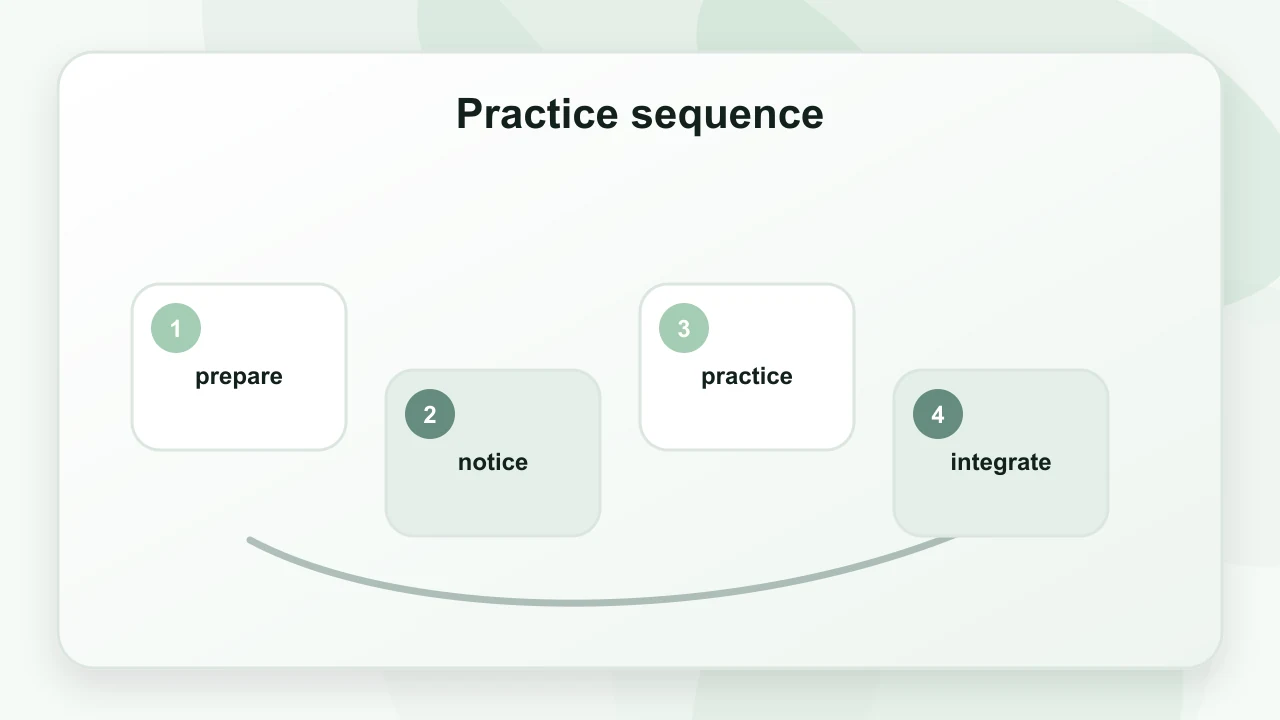
The infographic summarizes the article as prepare, notice, practice, integrate. It is a reading aid only and does not add new claims beyond the article.
Meditation for mental health is a broad group of attention and awareness practices. Depending on the method, a person may focus on breathing, sound, a repeated phrase, bodily sensations, compassion, imagery, or the ordinary flow of thoughts. Meditation may help some people manage stress, anxiety, depressive symptoms, or sleep-related distress, but results vary and the quality of evidence differs by condition.
Meditation is not a test of mental strength, and it does not require a blank mind. It is best treated as a potentially useful support rather than a cure or replacement for professional care.
What meditation includes
Meditation may involve:
- mindfulness of breathing;
- body awareness;
- focused attention on sound or an object;
- compassion or loving-kindness practice;
- guided meditation;
- movement-based meditation;
- repeating a word or phrase;
- open awareness of thoughts and feelings.
Mindfulness is one form of meditation, not a synonym for every meditation practice.
How meditation may support mental health
Possible benefits of meditation for mental health include:
- reduced perceived stress;
- greater awareness of emotional triggers;
- less automatic rumination;
- improved ability to pause before reacting;
- better coping with discomfort;
- support for sleep or relaxation in some people;
- a repeatable routine that creates quiet and structure.
These outcomes are not guaranteed. Meditation studies vary in quality, duration, comparison groups, and participant characteristics.
What meditation is not
Meditation is not:
- a requirement to stop thinking;
- a guaranteed way to feel calm;
- a cure for trauma, depression, anxiety, or psychosis;
- proof that distress is caused by a lack of mindfulness;
- a replacement for medication or psychotherapy;
- automatically safe because it is “natural.”
A practice can be meaningful without making exaggerated medical claims.
A simple starting practice
Try this for one to three minutes:
- Sit, stand, or walk in a supported position.
- Keep the eyes open if that feels safer.
- Notice one sound or physical point of contact.
- Follow one ordinary breath without forcing it.
- When attention wanders, gently return.
- End by identifying the next practical action in your day.
The aim is not perfect concentration. Returning attention is the practice.
Guided meditation for mental health
Guided meditation uses spoken instructions, music, imagery, or timed prompts. It may help beginners who find silence difficult.
Choose recordings that:
- use calm, non-coercive language;
- allow you to stop or modify the practice;
- avoid promises of trauma release or instant healing;
- do not pressure you to recall painful memories;
- come from a qualified and transparent source.
A guide should support choice, not demand emotional surrender.
Meditation and anxiety
Short, externally anchored meditation may help some people slow reactivity. Others become more anxious when focusing on breathing, heartbeat, or bodily sensations.
Useful modifications include:
- keeping the eyes open;
- focusing on sounds rather than breath;
- walking instead of sitting;
- practicing for less time;
- using grounding before meditation;
- working with a clinician when panic or trauma symptoms are present.
Meditation and depression
Meditation may support awareness of rumination and self-critical thinking. However, severe depression can make stillness feel heavy or isolating. Movement, behavioral activation, social contact, and structured treatment may be more useful starting points.
Meditation should not become another reason to blame yourself for symptoms.
Possible risks and adverse experiences
Some people report:
- increased anxiety;
- intrusive thoughts;
- fear of losing control;
- dissociation or feeling unreal;
- resurfacing traumatic memories;
- worsening self-criticism;
- sleep disruption;
- difficulty stopping an intense practice.
Research on adverse effects is less developed than research on benefits. Stop or reduce the practice when symptoms worsen and seek qualified guidance when needed.
How much meditation is enough?
More is not automatically better. A realistic plan may be:
- one to three minutes daily for the first week;
- five minutes if the practice remains tolerable;
- occasional guided sessions;
- informal attention during walking, eating, or routine tasks.
Consistency matters more than long sessions.
When professional care matters
Meditation should not delay assessment for persistent depression, severe anxiety, trauma symptoms, mania, psychosis, substance withdrawal, self-harm, suicidal thoughts, or unexplained physical symptoms.
In the United States, call or text 988 for crisis support. Call emergency services for immediate danger.
Practical takeaway
Use meditation for mental health as an optional skill:
- Start briefly.
- Choose a simple focus.
- Keep the eyes open if preferred.
- Avoid forcing the breath.
- Stop when distress increases.
- Return to ordinary life rather than endlessly monitoring your mind.
- Maintain appropriate professional care.
See Somatic Psychology, PMR Relaxation, and Progressive Muscle Relaxation.
Sources
- NCCIH — Meditation and Mindfulness: Effectiveness and Safety
- NCCIH — Relaxation Techniques: What You Need to Know
- American Psychological Association — Mindfulness Meditation