

Visual summary
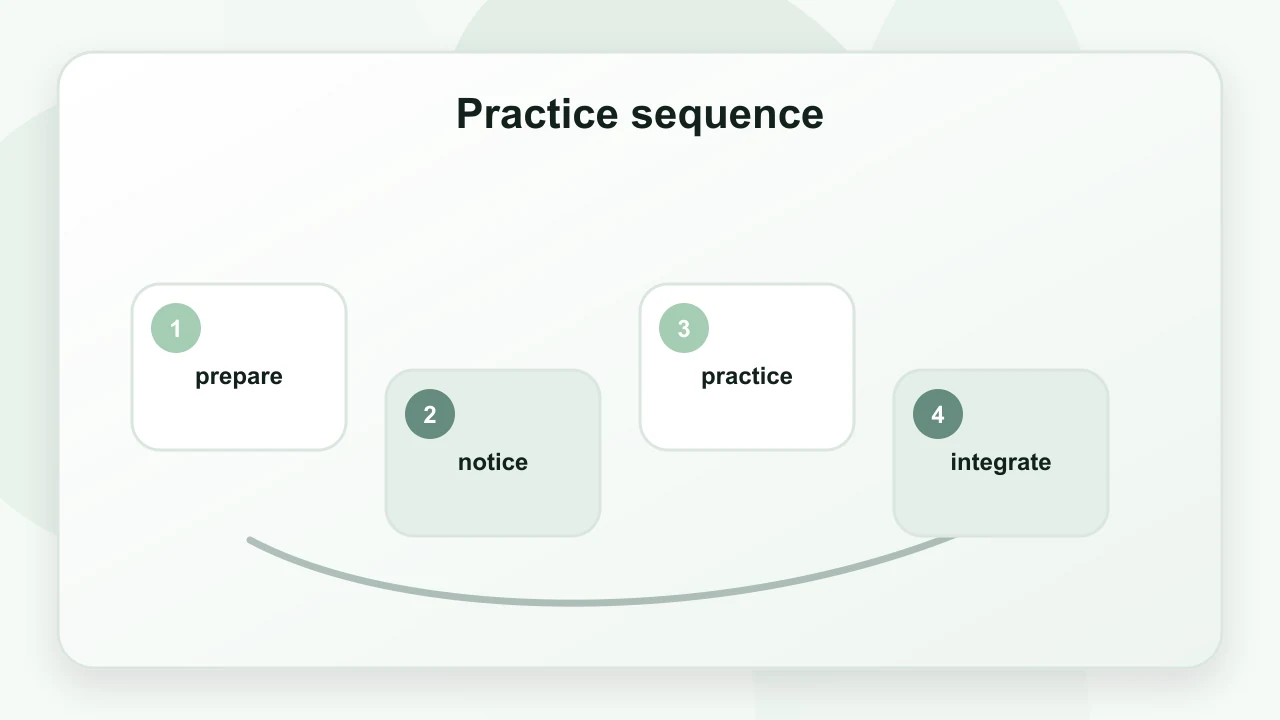
The infographic summarizes the article as prepare, notice, practice, integrate. It is a reading aid only and does not add new claims beyond the article.
Somatic psychology is a broad area of theory and practice that pays attention to the relationship between psychological experience and bodily sensation, posture, movement, breathing, and autonomic arousal. Somatic approaches may ask not only “What are you thinking?” but also “What are you noticing in your body right now?”
The field includes multiple schools and methods. Some techniques overlap with established relaxation, mindfulness, exposure, movement, and trauma treatments. Other claims—especially that trauma is literally stored in specific tissues or can be released through one technique—go beyond current evidence.
What somatic psychology includes
Somatic psychology may involve:
- noticing physical sensations;
- observing posture and movement;
- grounding through the senses;
- comfortable breathing;
- tracking changes in muscle tension;
- using movement to explore emotion;
- identifying bodily cues before escalation;
- integrating verbal reflection with body awareness.
The term is not one standardized treatment.
Somatic responses in psychology
A somatic response is a bodily component of psychological experience. Examples include:
- rapid heartbeat during fear;
- muscle tension during anger;
- heaviness during low mood;
- nausea during anxiety;
- freezing or numbness during overwhelm;
- changes in breathing during stress.
These responses are real, but they are not specific to one diagnosis. Medical conditions and medication effects can produce similar symptoms.
Somatic intervention psychology
A somatic intervention may be as simple as noticing both feet on the floor or as complex as a structured trauma treatment. Useful questions include:
- What is the exact method?
- What evidence supports it?
- What are the risks?
- Is the provider licensed?
- How will worsening symptoms be handled?
- Does the method complement or replace established care?
Integral somatic psychology and somatic depth psychology
Terms such as integral somatic psychology and somatic depth psychology refer to particular schools that combine body awareness with developmental, psychodynamic, spiritual, or integrative ideas.
These approaches may be meaningful to some people, but the labels do not guarantee effectiveness, licensure, or scientific support. Evaluate the actual provider and intervention.
Who is considered a founder of somatic psychology?
There is no single uncontested founder. Historical influences include Wilhelm Reich, Pierre Janet, body psychotherapy traditions, movement therapy, stress physiology, and later trauma-focused approaches.
Because the field developed from several traditions, simplified claims that one person “invented” somatic psychology are usually incomplete.
What somatic approaches may help with
Somatic techniques may support:
- awareness of stress signals;
- grounding during anxiety;
- noticing tension;
- emotional regulation;
- gradual engagement with avoided sensations;
- integration of movement into therapy;
- relaxation or sleep routines.
Evidence depends on the specific method, condition, provider, and comparison treatment.
What somatic psychology is not
It is not proof that:
- every symptom is trauma;
- trauma is physically trapped in one body part;
- shaking always releases trauma;
- crying or movement guarantees healing;
- one bodywork session cures a disorder;
- medical symptoms should be interpreted psychologically;
- verbal therapy is unnecessary.
A simple, grounded somatic exercise
Try for one minute:
- Look around and identify where you are.
- Notice contact between the body and chair or floor.
- Identify one neutral sensation.
- Make one small movement, such as rolling the shoulders.
- Notice whether the sensation changes.
- Stop if distress increases.
Choose neutral or external sensations rather than intense internal focus when trauma or panic is present.
Risks and limitations
Somatic work may increase distress when:
- body attention triggers panic;
- inward focus intensifies dissociation;
- memories emerge too quickly;
- the provider pushes physical contact;
- consent is unclear;
- the method discourages medication or medical care;
- the person feels blamed for being “dysregulated.”
Touch should never occur without clear, informed, ongoing consent.
How to choose a provider
Ask:
- Are you licensed to provide mental-health treatment?
- What somatic method do you use?
- What training and supervision do you have?
- Is touch part of the work?
- How is consent handled?
- What evidence supports the method?
- How do you respond if symptoms worsen?
- Will you coordinate with medical or psychiatric care?
A certificate in a proprietary method is not the same as a professional mental-health license.
When professional or medical care is needed
Seek medical evaluation for new or unexplained physical symptoms, fainting, chest pain, neurological changes, or severe breathing problems.
Seek mental-health care for persistent trauma symptoms, severe anxiety, depression, psychosis, mania, self-harm, or suicidal thoughts. In the United States, call or text 988 for crisis support.
Practical takeaway
Use somatic psychology as a carefully defined mind-body framework, not a cure claim. Choose specific, low-risk practices, maintain medical and psychological care, verify provider credentials, and stop when body-focused work increases distress.
See Progressive Muscle Relaxation, Meditation for Mental Health, and Mindfulness for Mental Health.
Sources
- NCCIH — Meditation and Mindfulness: Effectiveness and Safety
- NCCIH — Yoga: What You Need to Know
- American Psychological Association — Mindfulness Meditation
- National Institute of Mental Health — Psychotherapies