
Visual summary
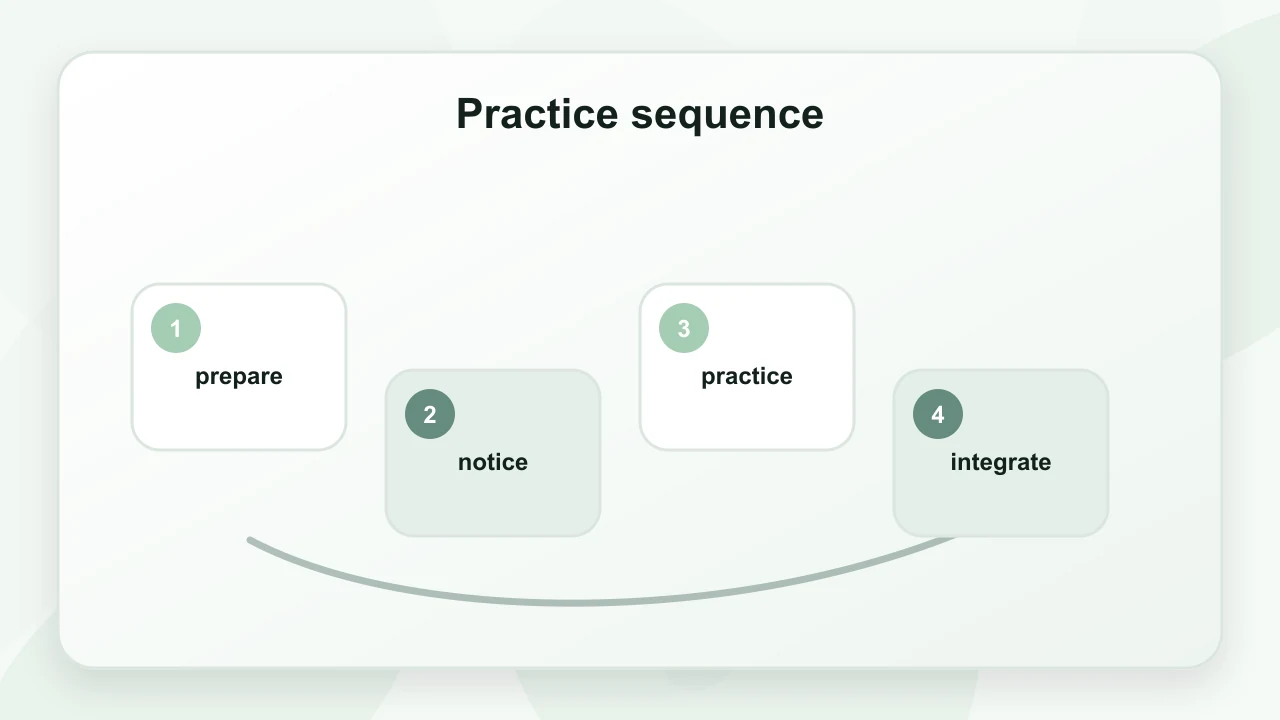
The infographic summarizes the article as prepare, notice, practice, integrate. It is a reading aid only and does not add new claims beyond the article.
PMR relaxation is short for progressive muscle relaxation, a technique that involves gently tensing and releasing muscle groups in sequence. The contrast helps a person notice where tension is held and practice reducing unnecessary muscular effort.
PMR may support stress management, anxiety coping, sleep routines, and awareness of physical tension. It is usually low risk when practiced gently, but painful areas, recent injuries, surgery, and certain medical conditions require modification.
What PMR stands for
PMR stands for progressive muscle relaxation. The method is associated with physician Edmund Jacobson’s work on progressive relaxation.
Modern versions often use fewer muscle groups and shorter sessions than the original method. Some recordings combine PMR with breathing, imagery, or mindfulness.
How PMR relaxation works
The practice creates a clear contrast:
- Notice current tension.
- Tighten a muscle group gently.
- Hold briefly.
- Release.
- Notice the change.
- Move to the next area.
This may increase awareness of chronic tension and help the body shift toward a quieter state.
A basic PMR sequence
Use mild effort for about three to five seconds, then release for 10–15 seconds.
Hands
Make a gentle fist, then release.
Arms
Bend the elbows slightly and tense the arms, then soften.
Shoulders
Lift the shoulders toward the ears without straining, then let them drop.
Face and jaw
Gently tighten the forehead or jaw, then release. Do not clench hard.
Abdomen
Tighten lightly while breathing normally, then release.
Thighs
Press the legs gently together or tighten the thighs, then relax.
Lower legs and feet
Point or flex the feet gently, then release. Stop if cramping begins.
A shortened PMR relaxation routine
When time is limited, use four groups:
- hands and arms;
- face and shoulders;
- abdomen and hips;
- legs and feet.
A short practice may take three to five minutes.
PMR relaxation for sleep
PMR may be included in a wind-down routine. Use lighter contractions and avoid turning the practice into a demand to fall asleep.
Helpful principles:
- keep a stable sleep schedule;
- use dim light;
- stop clock-checking;
- finish with ordinary breathing;
- seek assessment when insomnia persists.
PMR alone is not equivalent to cognitive behavioral therapy for insomnia.
PMR relaxation for anxiety
The technique may help when anxiety is accompanied by obvious muscle tension. During panic, however, long inward-focused exercises may increase body monitoring.
Use fewer muscle groups, keep the eyes open, or switch to grounding if symptoms intensify.
Common mistakes
Tensing too strongly
PMR should not resemble strength training.
Holding the breath
Breathe normally. Straining can increase discomfort.
Practicing through pain
Skip injured, painful, inflamed, or recently operated areas.
Demanding complete relaxation
The goal is to reduce excess tension, not achieve a perfect state.
Treating PMR as a cure
PMR is a coping and relaxation technique, not a complete treatment for anxiety, insomnia, pain, or depression.
Who should ask a clinician first?
Seek medical guidance when you have:
- recent surgery;
- significant muscle or joint injury;
- neurological disease;
- severe chronic pain;
- recurrent cramping;
- cardiovascular concerns affected by straining;
- pregnancy-related restrictions;
- symptoms that are new or unexplained.
When professional care matters
Persistent anxiety, insomnia, trauma symptoms, pain, depression, mania, psychosis, self-harm, or suicidal thoughts require appropriate evaluation.
In the United States, call or text 988 for crisis support.
Practical takeaway
For safe PMR relaxation:
- Use mild tension.
- Hold briefly.
- Release fully.
- Notice the contrast.
- Breathe normally.
- Skip painful areas.
- Stop if symptoms worsen.
See Guided Muscle Relaxation, Jacobson Muscle Relaxation, and Systematic Relaxation.
Sources
- NCCIH — Relaxation Techniques: What You Need to Know
- VA Whole Health Library — Progressive Muscle Relaxation
- Veterans Health Library — Progressive Muscle Relaxation and Guided Imagery