

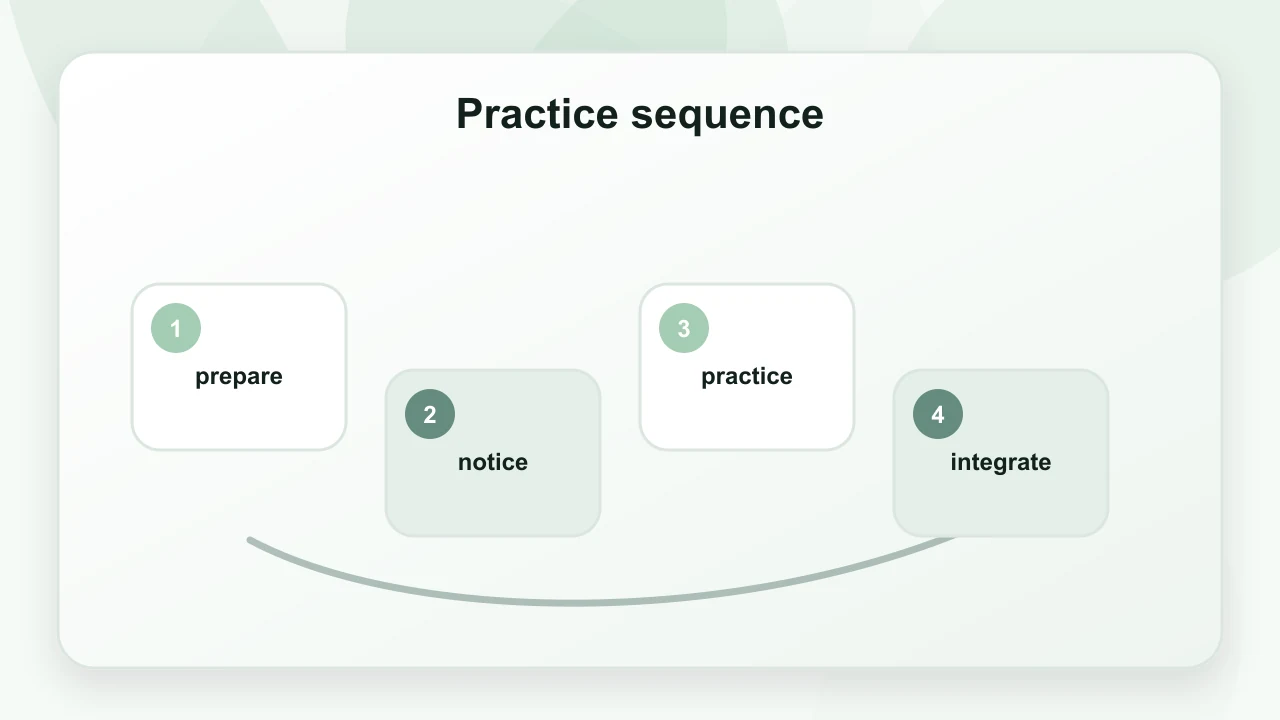
Visual summary
The infographic summarizes the article as prepare, notice, practice, integrate. It is a reading aid only and does not add new claims beyond the article.
Mindfulness is the practice of paying attention to present experience with less automatic judgment. It may involve noticing thoughts, emotions, sounds, breathing, body sensations, or ordinary activities.
Research suggests mindfulness-based programs may help some people with stress, anxiety, depression symptoms, and quality of life. Benefits are usually modest, and outcomes vary. Mindfulness can also increase distress for some people, especially when trauma, panic, dissociation, or severe symptoms are present.
What mindfulness includes
- noticing the breath;
- observing thoughts as mental events;
- paying attention to sounds;
- body awareness;
- walking with attention;
- eating mindfully;
- noticing emotion before acting;
- returning attention after distraction.
The goal is not to empty the mind.
Mindfulness and mental health benefits
Potential benefits may include:
- reduced perceived stress;
- less automatic rumination;
- greater awareness of triggers;
- improved coping;
- greater tolerance of discomfort;
- support for relapse prevention in selected contexts;
- improved attention for some people.
Evidence varies by condition and program.
Mindfulness is not the same as meditation
Mindfulness is a quality of attention. Meditation is one way to train it.
A person can practice mindfulness while walking, washing dishes, listening, or completing a routine task.
A simple one-minute exercise
- Keep the eyes open.
- Notice three sounds.
- Feel the chair or floor.
- Notice one ordinary breath.
- Name the current emotion if clear.
- Choose the next practical action.
This combines mindfulness with grounding.
When mindfulness may feel worse
Possible adverse experiences include:
- increased anxiety;
- intrusive thoughts;
- trauma memories;
- dissociation;
- fear of losing control;
- self-criticism;
- sleep disruption.
Stop, orient externally, move gently, and seek guidance if symptoms persist.
Common myths
“Mindfulness means no thoughts”
Thoughts are expected.
“Mindfulness always calms you”
It may reveal discomfort instead.
“Longer is always better”
Brief practice may be safer and easier to sustain.
“Mindfulness replaces therapy”
It may complement treatment but should not replace it.
“If it does not work, you are doing it wrong”
A practice may simply be a poor fit.
How to start safely
- Begin with one to three minutes.
- Keep the eyes open if preferred.
- Use sounds or external objects rather than body focus.
- Avoid forcing the breath.
- Stop when symptoms worsen.
- Use qualified instruction for clinical symptoms.
- Discuss practice with a clinician when trauma, psychosis, severe panic, or dissociation is present.
Mindfulness, yoga, and body-based practices
Yoga, stretching, progressive relaxation, and breathing may include mindful attention. Each has different physical demands and risks.
A broad “mind-body” label does not guarantee effectiveness or safety.
When professional care matters
Mindfulness should not delay assessment for persistent depression, anxiety, trauma symptoms, psychosis, mania, substance withdrawal, self-harm, or suicidal thoughts.
In the United States, call or text 988 for crisis support.
Practical takeaway
Use mindfulness as a flexible attention skill:
- Start briefly.
- Keep some attention in the environment.
- Avoid forcing calm.
- stop if distress increases.
- return to a meaningful action.
- maintain appropriate professional care.
See Meditation And Mental Health, Systematic Relaxation, and Jacobson Muscle Relaxation.
Sources
- NCCIH — Meditation and Mindfulness: Effectiveness and Safety
- NCCIH — Yoga: What You Need to Know
- American Psychological Association — Mindfulness Meditation