
Visual summary
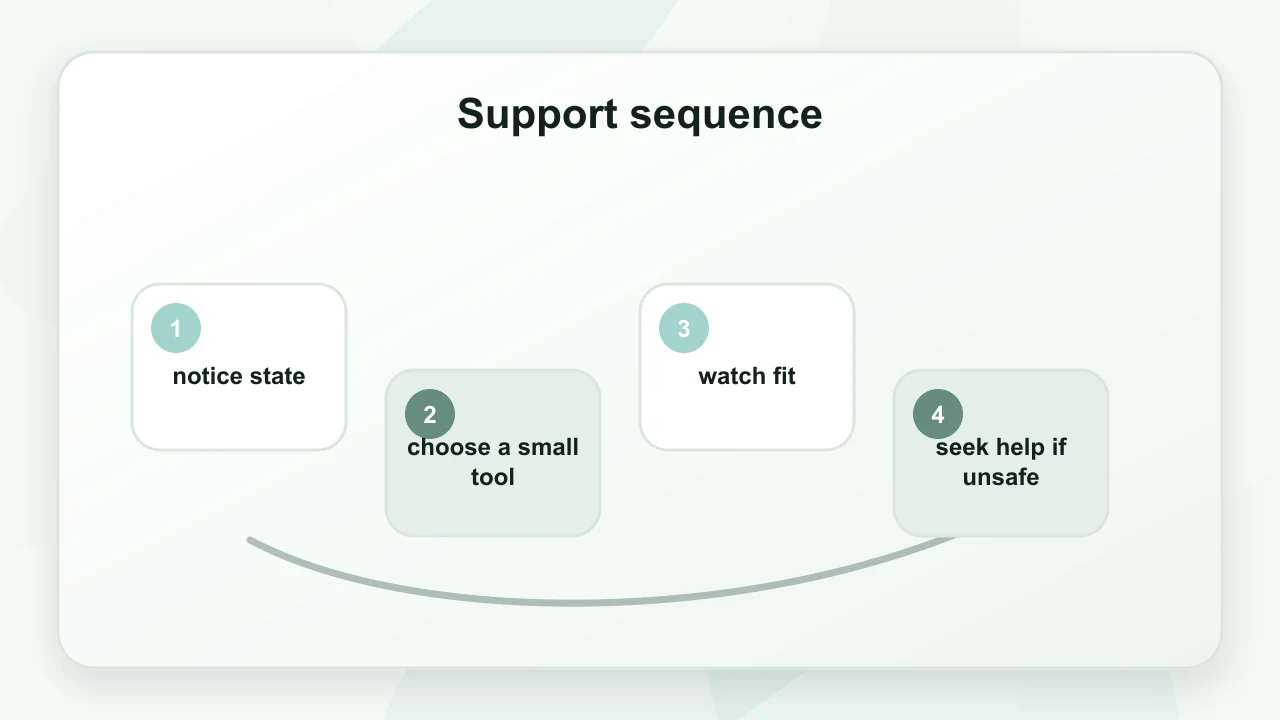
The infographic summarizes the article as notice state, choose a small tool, watch fit, seek help if unsafe. It is a reading aid only and does not add new claims beyond the article.
Mood regulation is the ongoing process of influencing emotional state over time. It includes how the brain and body respond to sleep, stress, physical health, relationships, thoughts, activity, substances, and the environment.
It is broader than calming down during one difficult moment. Emotional regulation often focuses on a specific emotion; mood regulation looks at patterns lasting hours, days, or longer.
What influences mood regulation?
Mood is shaped by multiple systems:
- sleep and circadian rhythm;
- hormones and physical health;
- medication and substance effects;
- stress and trauma;
- interpretations and habits of attention;
- activity and social contact;
- nutrition and hydration;
- environmental conditions;
- psychiatric or neurological conditions.
There is rarely one isolated “mood center” that can simply be reset.
What “faulty mood regulation” may mean
The phrase faulty mood regulation is sometimes used informally to describe difficulty returning to baseline, frequent mood shifts, prolonged low mood, intense reactivity, or behavior driven by emotional state.
It is not a precise diagnosis. Similar experiences may occur with depression, anxiety, bipolar disorder, trauma-related conditions, ADHD, sleep disorders, substance use, medication effects, hormonal changes, pain, or medical illness.
Claims about “faulty mood regulation by the brain” should therefore be treated cautiously. Brain function matters, but mood cannot be understood from one chemical or neural pathway alone.
Practical mood regulation skills
1. Protect sleep timing
A reasonably consistent wake time and morning daylight can support the body clock. Very little sleep combined with unusual energy, impulsivity, or racing thoughts requires prompt professional assessment.
2. Use regular meals and hydration
Long gaps without food may worsen irritability, fatigue, or concentration for some people. Aim for simple, repeatable meals rather than perfect nutrition.
3. Match activity to current state
For low mood, use gentle activation: shower, walk, complete one task, or contact someone.
For agitation, reduce stimulation and use rhythmic movement, grounding, or a quieter setting.
4. Separate mood from instructions
A mood is real, but it is not always a reliable command. “I feel hopeless” is different from “nothing can help.” “I feel rejected” is different from “everyone has rejected me.”
5. Use planned positive activity
Choose activities that provide mastery, pleasure, connection, meaning, or physical care. Do not wait to feel motivated before beginning the smallest version.
6. Reduce mood destabilizers
Track whether caffeine, alcohol, cannabis, stimulant use, missed medication, sleep loss, or social-media exposure changes mood. Do not stop prescribed medication abruptly.
7. Keep a simple pattern log
Record:
- sleep;
- medication;
- major stressors;
- energy;
- mood;
- alcohol or other substances;
- menstrual or hormonal factors when relevant.
A short log can help identify patterns and support a clinical conversation. It should not become compulsive self-monitoring.
Mood regulation strategies for difficult days
Use a brief sequence:
- Name the mood.
- Check sleep, food, medication, pain, and substances.
- Reduce immediate risk.
- Choose one body-based action.
- Choose one practical action.
- Contact support when needed.
- Reassess later rather than demanding instant change.
What mood regulation is not
Mood regulation is not:
- forced positivity;
- suppressing grief or anger;
- pretending unsafe conditions are acceptable;
- using self-help to avoid professional care;
- maintaining one emotional state at all times;
- blaming a person for symptoms.
Some moods need to be tolerated and understood, not immediately corrected.
When to seek professional help
Seek evaluation when mood changes are persistent, severe, rapidly cycling, associated with major functional decline, or accompanied by:
- suicidal thoughts;
- self-harm;
- psychosis;
- unusually elevated or irritable mood;
- decreased need for sleep;
- impulsive or dangerous behavior;
- substance withdrawal;
- new neurological symptoms.
In the United States, call or text 988 for crisis support.
Practical takeaway
Mood regulation is built through repeated supports rather than one technique. Begin with sleep timing, regular food, modest activity, one meaningful task, and one supportive contact. Track major patterns and seek professional assessment when changes are extreme or persistent.
See Depression and Routine, Yoga for Depression, and Emotional Regulation Techniques.
Sources
- World Health Organization — Mental disorders
- National Institute of Mental Health — Depression
- National Institute of Mental Health — Bipolar Disorder
- CDC — Mental Health