

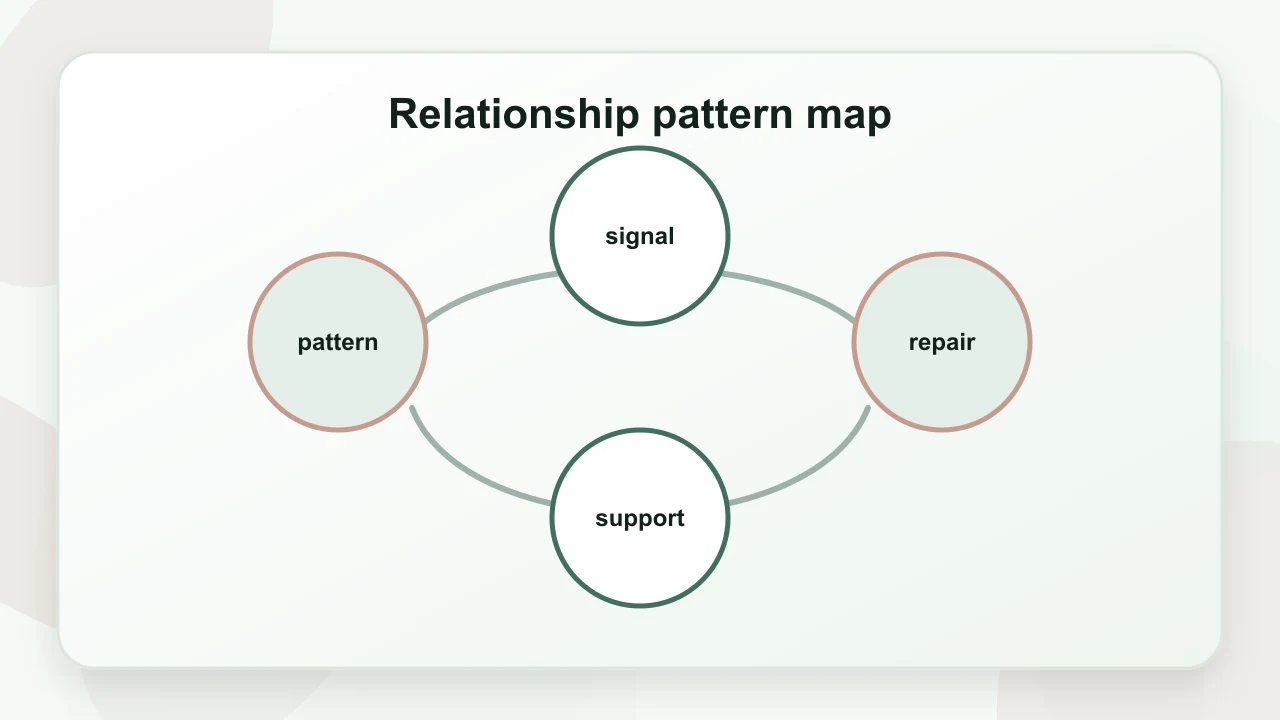
Visual summary
The infographic summarizes the article as pattern, signal, repair, support. It is a reading aid only and does not add new claims beyond the article.
Family conflict resolution is the process of addressing disagreements in a way that protects dignity, clarifies needs, and creates workable next steps. It does not require everyone to agree, forgive immediately, or remain equally close. The goal is to reduce harm, understand the actual problem, and decide what can change.
Family conflict may involve parenting, money, caregiving, household responsibilities, boundaries, inheritance, cultural expectations, adult siblings, or relationships with extended family. The right approach depends on whether the conflict is ordinary disagreement, a long-standing pattern, or an unsafe situation.
What family conflict resolution includes
Effective family conflict resolution may involve:
- clarifying what happened;
- separating facts from assumptions;
- identifying each person’s needs and responsibilities;
- reducing insults, threats, and interruptions;
- negotiating practical agreements;
- setting boundaries;
- deciding how progress will be reviewed;
- involving a neutral professional when needed.
It is not simply “talking it out.” Repeating the same argument without structure may intensify resentment.
What it does not include
Family conflict resolution does not mean:
- forcing reconciliation;
- treating all viewpoints as equally safe or accurate;
- asking children to manage adult conflict;
- excusing harmful behavior because someone is stressed;
- pressuring a person to disclose information;
- using communication techniques in an abusive situation;
- demanding forgiveness before accountability.
A practical family conflict resolution process
1. Define one issue
Avoid combining years of grievances into one conversation. Use a specific statement:
“We need to decide how caregiving responsibilities will be divided this month.”
2. Choose the right time
Do not begin when someone is intoxicated, exhausted, driving, or already highly activated. Schedule a time and limit the discussion to 20–40 minutes.
3. Use observable language
Say:
“You changed the plan without telling me.”
Rather than:
“You never respect anyone.”
Observable language gives the other person something concrete to respond to.
4. Let each person summarize
Before defending a position, each person should summarize what they heard. The speaker confirms or corrects the summary.
Understanding does not require agreement.
5. Identify needs and limits
A position is “I will not visit on Sundays.” A need may be “I need one day without family obligations.” Separating the two may reveal more options.
6. Generate several solutions
List options before choosing one. For example:
- rotate responsibilities;
- use a shared calendar;
- shorten visits;
- hire outside help;
- divide costs differently;
- communicate through one designated person.
7. Make the agreement specific
A useful agreement answers:
- Who will do what?
- By when?
- How often?
- What happens if the plan changes?
- When will it be reviewed?
Family conflict resolution strategies for recurring patterns
Use a structured pause
A pause should include a return time:
“I need 30 minutes. I will come back at 7:30.”
Leaving indefinitely may feel like abandonment or punishment.
Limit triangulation
Triangulation occurs when one person recruits a third person rather than speaking directly to the person involved. Avoid asking children, siblings, or relatives to carry messages.
Separate relationship issues from practical issues
A caregiving dispute may involve both schedules and old resentment. Solve the immediate practical problem first, then address the relationship pattern separately.
Protect children from adult roles
Children should not serve as mediators, confidants, or evidence-gatherers in adult conflict.
When family conflict resolution services may help
Professional help may be useful when:
- the same conflict repeats without progress;
- communication becomes contemptuous or chaotic;
- family members disagree about caregiving or parenting;
- inheritance or financial disputes are escalating;
- a neutral structure is needed;
- one person cannot speak without being interrupted;
- the conflict affects children or vulnerable adults.
Possible services include family therapy, mediation, parenting coordination, legal advice, or community conflict-resolution programs. These services have different roles and should not be treated as interchangeable.
Mediation versus family therapy
Mediation focuses on reaching practical agreements. The mediator remains neutral and does not provide mental-health treatment.
Family therapy focuses on interaction patterns, emotional functioning, communication, and relationships.
Some situations need both, but legal and clinical roles should remain clear.
When ordinary conflict resolution is unsafe
Do not rely on joint negotiation when there is:
- physical or sexual violence;
- threats;
- stalking;
- coercive control;
- child or elder abuse;
- financial restriction;
- fear of retaliation;
- pressure to reveal information that may increase danger.
Specialized safety, legal, child-protection, or domestic-violence support may be required.
Practical takeaway
Use this sequence:
- Define one issue.
- Choose a safe time.
- Describe behavior, not character.
- Listen and summarize.
- Identify needs.
- generate options.
- Make one specific agreement.
- Review it later.
See Family Connection, Conflict Within Family, and Family Psychology.
Sources
- American Psychological Association — Relationships
- American Psychological Association — Parenting
- National Institute of Mental Health — Caring for Your Mental Health