
Visual summary
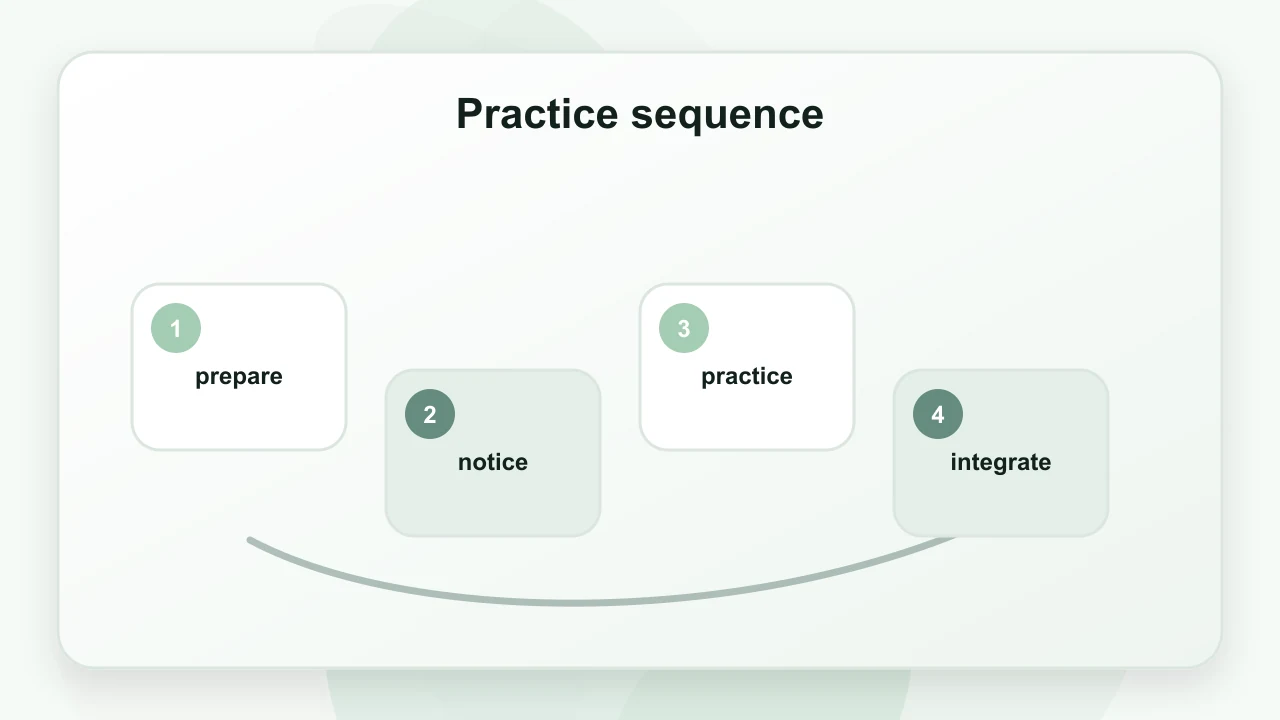
The infographic summarizes the article as prepare, notice, practice, integrate. It is a reading aid only and does not add new claims beyond the article.
Guided muscle relaxation is progressive muscle relaxation performed with spoken instructions from a clinician, teacher, recording, or app. The guide directs attention through the body and usually asks the listener to tense and release muscle groups in sequence.
A guided format can reduce the need to remember each step. It may be useful for beginners, people who prefer structure, or anyone using relaxation as part of a stress or sleep routine.
How guided muscle relaxation differs from PMR
PMR describes the technique itself. Guided muscle relaxation describes how the technique is delivered.
A session may include:
- settling into a supported position;
- noticing baseline tension;
- tensing and releasing each area;
- pauses to observe the difference;
- comfortable breathing;
- a short reorientation at the end.
Some recordings add imagery or music. These elements are optional.
What a safe guide should say
A responsible script should remind listeners to:
- use mild rather than maximum effort;
- breathe normally;
- skip painful or injured areas;
- keep the eyes open if preferred;
- stop when symptoms worsen;
- choose a safe seated or lying position;
- seek professional advice when medical conditions affect participation.
Be cautious with recordings that promise trauma release, deep healing, or guaranteed sleep.
A sample guided sequence
Arrival
Notice the support beneath the body. Look around the room and confirm that you are in a safe enough place to practice.
Hands and arms
Gently tighten the hands and arms. Hold briefly. Release and notice the change.
Face and shoulders
Lift the shoulders slightly and tighten the face only a little. Release the jaw, forehead, and shoulders.
Chest and abdomen
Notice breathing without forcing it. Tighten the abdomen mildly, then release.
Hips and legs
Tighten the thighs gently. Release. Flex the feet only if comfortable, then soften.
Completion
Notice the whole body. Move the fingers and toes. Look around the room and return gradually to the next activity.
Guided progressive muscle relaxation for sleep
For bedtime:
- choose a low-volume recording;
- use a timer that does not continue playing all night;
- keep contractions light;
- avoid bright screens;
- do not restart repeatedly in pursuit of perfect sleep.
Persistent insomnia may require structured clinical treatment.
Guided meditation for muscle relaxation
Some recordings combine meditation and muscle relaxation. This may be pleasant, but it can blur the difference between:
- attention practice;
- imagery;
- breathing;
- muscle tension and release.
Knowing which component is being used helps you identify what actually works.
When a recording may be a poor fit
Stop or switch recordings when the guide:
- uses shaming or coercive language;
- asks for painful contractions;
- includes long breath holds;
- directs traumatic imagery without warning;
- claims to diagnose your nervous system;
- discourages medical or mental-health care;
- makes you feel trapped or more dissociated.
Accessibility and adaptations
Guided relaxation can be adapted for:
- seated practice;
- limited mobility;
- one side of the body;
- imagined tension rather than physical contraction;
- shorter sessions;
- hearing or visual needs;
- pain-sensitive areas.
The method should fit the person, not the other way around.
When professional care matters
Seek assessment for persistent sleep problems, severe anxiety, trauma symptoms, chronic pain, unexplained muscle symptoms, depression, mania, psychosis, self-harm, or suicidal thoughts.
Practical takeaway
A useful guided muscle relaxation session should be predictable, gentle, and easy to stop. Use qualified sources, modify the sequence, and judge the recording by whether it reduces tension without increasing pain or distress.
See PMR Relaxation, Jacobson Muscle Relaxation, and Systematic Relaxation.
Sources
- NCCIH — Relaxation Techniques: What You Need to Know
- Veterans Health Library — Progressive Muscle Relaxation and Guided Imagery
- VA Whole Health Library — Progressive Muscle Relaxation