
Visual summary
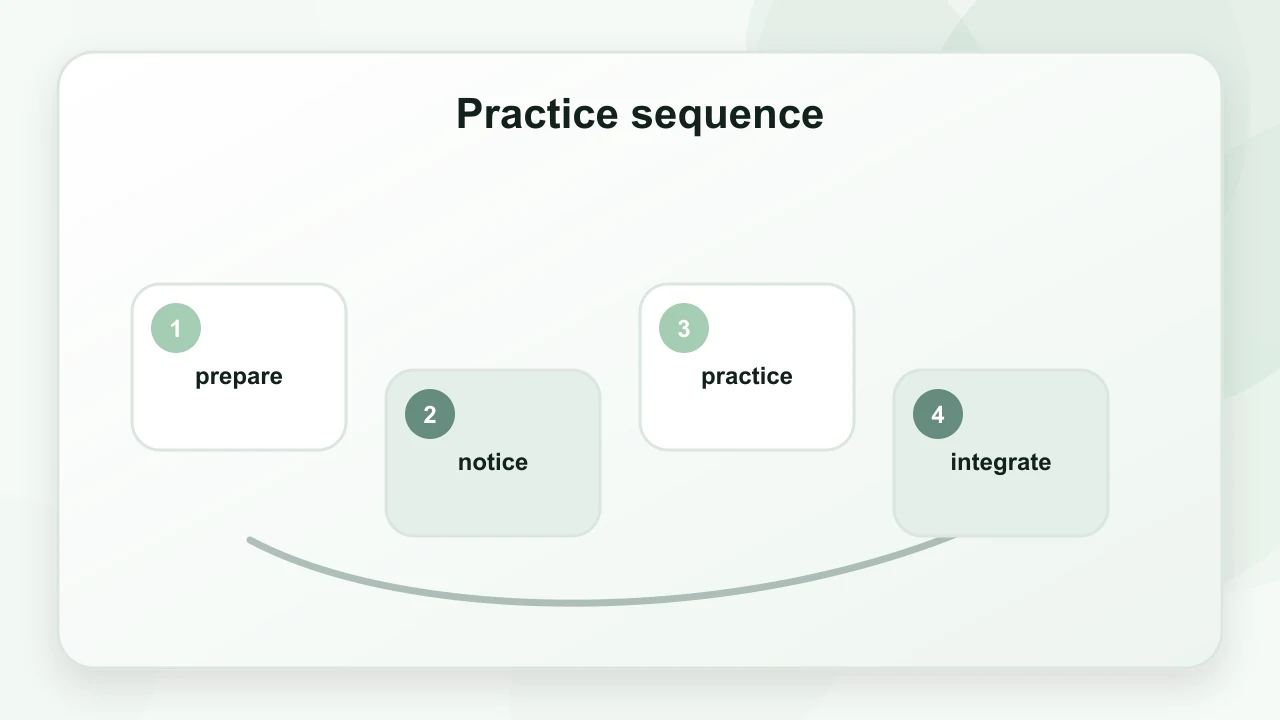
The infographic summarizes the article as prepare, notice, practice, integrate. It is a reading aid only and does not add new claims beyond the article.
Meditation and mental health are connected through attention, emotional awareness, stress response, and daily coping. Meditation may help some people notice thoughts without reacting automatically, reduce perceived stress, or build a steadier routine. Research suggests that selected meditation and mindfulness programs can support anxiety, depressive symptoms, sleep, or general wellbeing for some people.
Meditation is not a universal cure. Effects vary by method, instructor, duration, mental-health history, and current symptoms. Some people experience more anxiety, intrusive thoughts, dissociation, or resurfacing traumatic memories. Meditation should be used as an optional support—not as a reason to delay psychotherapy, medication, medical assessment, or urgent help.
What meditation includes
Meditation is a broad category. Common forms include:
- focused attention on breathing, sound, or an object;
- mindfulness meditation;
- body-scan practice;
- loving-kindness or compassion meditation;
- guided imagery;
- mantra or repeated-word meditation;
- movement-based meditation;
- open awareness of thoughts and sensations.
No single method is automatically the best meditation for mental health.
Meditation effects on mental health
Potential effects may include:
- reduced perceived stress;
- improved awareness of emotional triggers;
- less automatic rumination;
- greater ability to pause before responding;
- improved sleep or relaxation for some people;
- a more consistent self-care routine;
- modest symptom improvement in selected structured programs.
Meditation and mental-health research varies widely. Studies differ in quality, duration, comparison groups, participant screening, and adverse-effect reporting.
Advantages of meditation for mental health
Meditation can be:
- low-cost;
- practiced in short sessions;
- adapted to sitting, standing, or walking;
- combined with therapy;
- used without special equipment;
- adjusted for different cultural or spiritual preferences.
These advantages do not establish that meditation is sufficient treatment for a mental disorder.
What meditation does not include
Meditation does not require:
- an empty mind;
- complete calm;
- sitting cross-legged;
- spiritual belief;
- long sessions;
- ignoring difficult thoughts;
- forcing the breath;
- accepting unsafe circumstances.
A useful practice increases flexibility rather than pressure.
A simple three-minute practice
- Sit, stand, or walk in a supported position.
- Keep the eyes open if that feels safer.
- Notice one sound or point of physical contact.
- Follow one ordinary breath without changing it.
- When attention moves, gently return.
- End by naming the next practical action.
The practice is the return—not perfect concentration.
Guided meditation
Guided meditation may help beginners because it provides pacing and structure.
Choose recordings that:
- use optional rather than coercive language;
- allow the listener to stop;
- avoid guaranteed-healing claims;
- do not pressure memory recall;
- explain the instructor’s qualifications;
- include modifications for distress.
When meditation may worsen symptoms
Possible adverse experiences include:
- increased anxiety;
- panic;
- intrusive thoughts;
- dissociation;
- traumatic memories;
- sleep disruption;
- fear of losing control;
- intensified self-criticism.
Stop the practice, orient to the environment, move gently, and seek qualified guidance when symptoms persist.
Meditation and trauma
Trauma-sensitive practice may involve:
- open eyes;
- short duration;
- external sounds rather than body focus;
- movement;
- permission to stop;
- working with a trauma-informed clinician.
Long silent retreats or intense inward focus may be unsuitable during unstable periods.
Meditation and serious mental-health symptoms
Meditation should not replace professional care for severe depression, mania, psychosis, substance withdrawal, self-harm, suicidal thoughts, or inability to manage basic needs.
In the United States, call or text 988 for crisis support.
How much meditation is enough?
Begin with one to three minutes. Increase only when the practice remains tolerable and useful.
More is not automatically better. A short daily practice may be more sustainable than occasional long sessions.
Practical takeaway
Use meditation and mental health practices carefully:
- Choose one simple method.
- Start briefly.
- Keep the practice optional.
- Avoid forcing breathing or calm.
- Stop when distress increases.
- Maintain appropriate professional care.
- Judge the practice by actual effect, not promises.
See Mindfulness And Mental Health, Systematic Relaxation, and Jacobson Muscle Relaxation.
Sources
- NCCIH — Meditation and Mindfulness: Effectiveness and Safety
- NCCIH — Yoga: What You Need to Know
- American Psychological Association — Mindfulness Meditation