
Visual summary
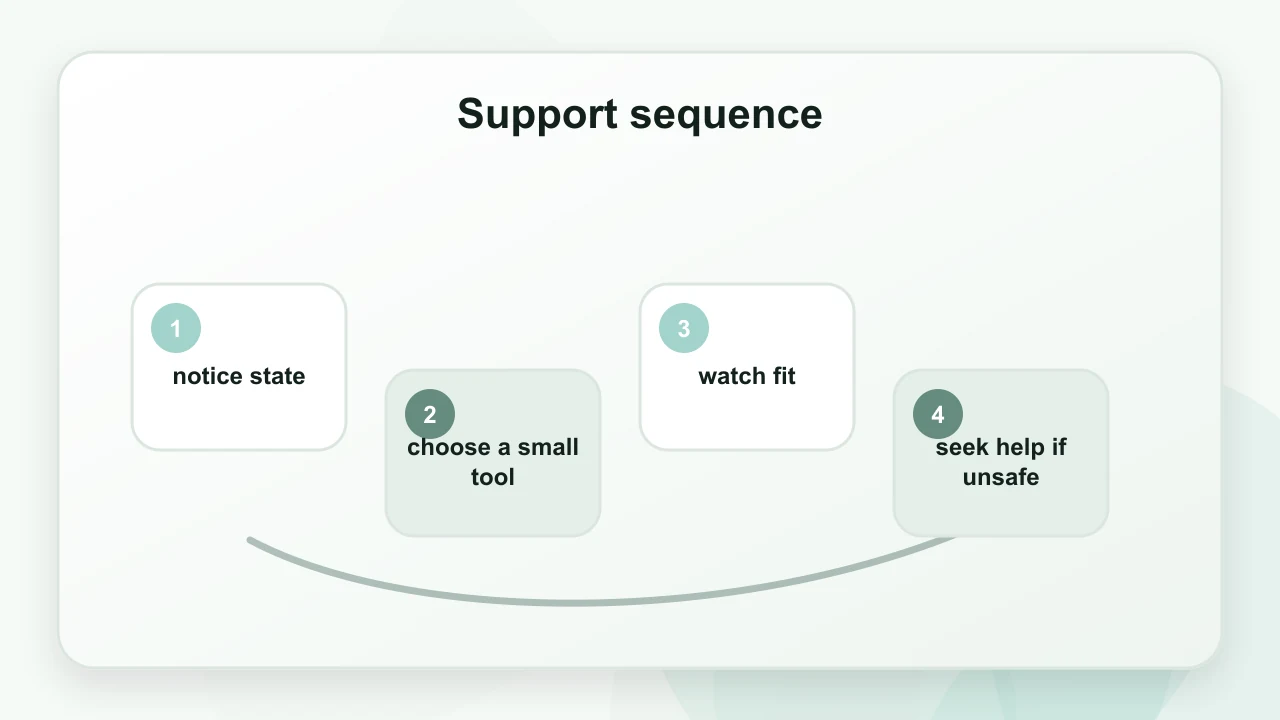
The infographic summarizes the article as notice state, choose a small tool, watch fit, seek help if unsafe. It is a reading aid only and does not add new claims beyond the article.
Breathing techniques for anxiety may help some people slow rapid breathing, reduce muscular tension, and create a brief pause before reacting. They work best when the breath remains gentle and comfortable. Repeatedly taking very large breaths, breathing too quickly, or holding the breath through distress can increase dizziness, tingling, chest discomfort, or panic.
There is no single best breathing technique for anxiety. The most useful method is one that is easy to repeat, does not intensify symptoms, and supports rather than replaces appropriate treatment.
Why breathing changes during anxiety
Anxiety can produce:
- faster breathing;
- upper-chest breathing;
- repeated sighing;
- breath-holding;
- air hunger;
- close monitoring of each breath;
- fear of ordinary bodily sensations.
These changes can become part of a feedback loop. The person notices a sensation, interprets it as dangerous, breathes more forcefully, and then experiences more symptoms.
Three breathing techniques to try
1. Gentle longer-exhale breathing
- Sit or stand with support.
- Relax the shoulders.
- Inhale gently through the nose if comfortable.
- Exhale slightly more slowly.
- Repeat five times.
- Return to ordinary breathing.
Do not empty the lungs forcefully.
2. Diaphragmatic breathing
Place a hand on the lower ribs or abdomen. Allow mild movement during the inhale without pushing the belly outward. Keep the breath moderate rather than deep.
3. Simple paced breathing
Choose an easy rhythm, such as inhaling for three counts and exhaling for four. Exact numbers are optional. Comfort matters more than the count.
Which techniques may help most?
Good breathing techniques for anxiety usually share several features:
- moderate breath size;
- relaxed posture;
- no straining;
- a comfortable pace;
- a slightly longer exhale;
- brief practice;
- attention partly anchored in the environment.
Calming breathing techniques for anxiety should reduce effort, not create a demanding performance task.
What often does not help
Maximum “deep” breaths
Large repeated inhalations may contribute to overbreathing.
Rigid counting
Exact timing can make some people more self-conscious or frustrated.
Long breath holds
These may increase air hunger and panic.
Closing the eyes automatically
For trauma symptoms or dissociation, open-eye practice may feel safer.
Repeating until anxiety disappears
Breathing should be a support tool, not a compulsory ritual.
Breathing techniques for anxiety and stress
For ordinary stress, breathing can be paired with:
- unclenching the jaw;
- lowering the shoulders;
- standing up;
- looking outside;
- walking briefly;
- naming the next practical action.
This prevents the exercise from becoming isolated inward monitoring.
When breathing makes anxiety worse
Stop the exercise when it causes:
- dizziness;
- tingling;
- chest discomfort;
- stronger air hunger;
- panic;
- dissociation;
- pain.
Return to ordinary breathing, orient visually, and feel physical support beneath the body.
New, severe, or unexplained chest pain or breathing difficulty requires medical assessment rather than assuming anxiety.
Breathing techniques and anxiety treatment
Relaxation methods may support some people, but anxiety disorders often need broader care such as:
- cognitive behavioral therapy;
- exposure-based treatment;
- medication;
- medical evaluation;
- sleep support;
- reduction of stimulant or substance-related effects;
- treatment of trauma or depression when present.
Breathing is one tool within a care plan.
When urgent help is needed
Seek urgent help for suicidal intent, psychosis, mania, immediate danger, or severe medical symptoms. In the United States, call or text 988 for crisis support and use emergency services for immediate danger.
Practical takeaway
For safer breathing techniques for anxiety:
- Think gentle, not huge.
- Keep the shoulders relaxed.
- Let the exhale slow slightly.
- Use only a few cycles.
- Keep some attention outside the body.
- Stop if symptoms increase.
- Seek professional care when anxiety persists or disrupts functioning.
See Deep Belly Breathing for Anxiety, Deep Breathing Exercises for Anxiety, and Anxiety and Deep Breathing.
Sources
- National Institute of Mental Health — Anxiety Disorders
- American Psychological Association — Anxiety
- NCCIH — Relaxation Techniques: What You Need to Know