
Visual summary
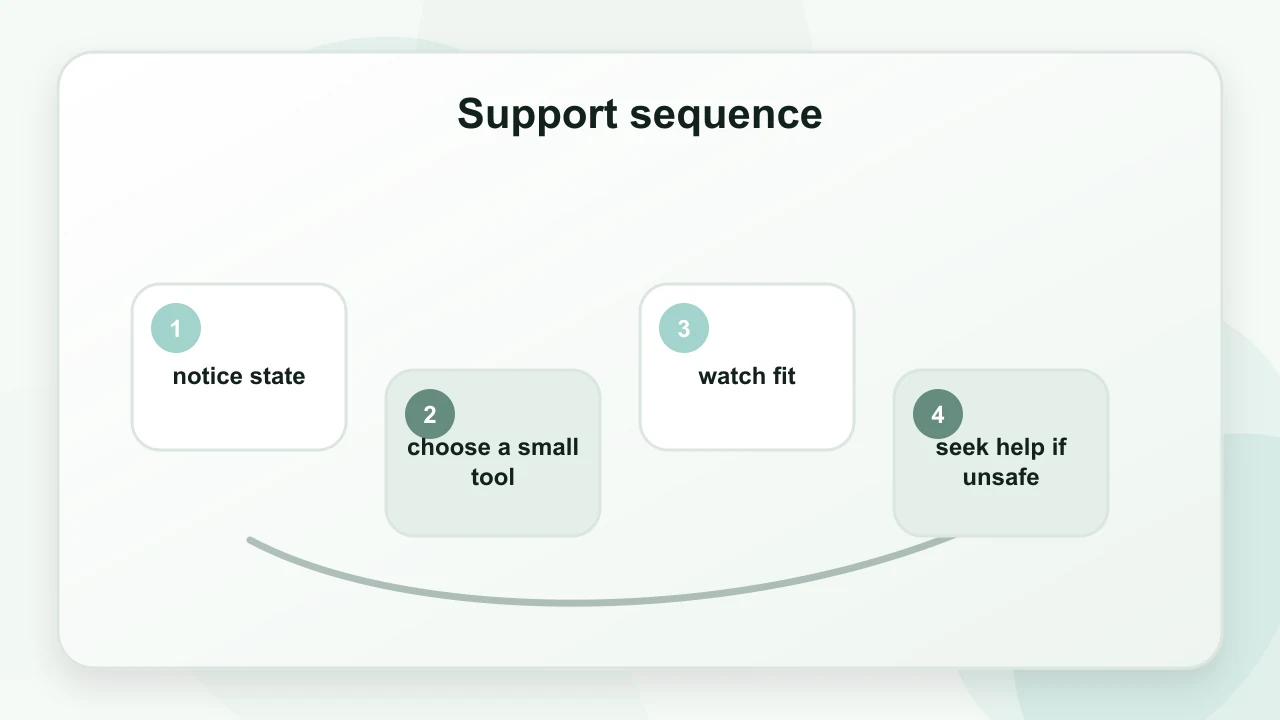
The infographic summarizes the article as notice state, choose a small tool, watch fit, seek help if unsafe. It is a reading aid only and does not add new claims beyond the article.
Deep breathing techniques for anxiety include several different methods: diaphragmatic breathing, paced breathing, extended-exhale breathing, box breathing, and selected yoga breathing practices. These techniques are not interchangeable. A method that feels settling for one person may cause air hunger, dizziness, or increased body monitoring for another.
The safest starting point is usually a moderate inhale, relaxed posture, and a comfortable exhale—without force or long holds.
Main types of deep breathing techniques
Diaphragmatic breathing
This encourages lower-rib and abdominal movement with less upper-chest effort. It should feel natural rather than exaggerated.
Paced breathing
The person follows a gentle rhythm. For example, inhale for three counts and exhale for four.
Extended-exhale breathing
The exhale is slightly longer than the inhale. This should not involve squeezing all air from the lungs.
Box breathing
Box breathing uses equal phases for inhale, hold, exhale, and hold. It may feel structured, but the holds can be uncomfortable during panic.
Yoga breathing techniques for anxiety
Yoga traditions include many breathing methods. Gentle alternate-nostril or slow breathing may feel calming to some people. Rapid breathing, forceful exhalation, or prolonged retention can increase dizziness or distress and should not be treated as universally safe.
Which technique should you choose?
Use the least intense method that helps.
Consider:
- whether you have panic sensitivity;
- whether body focus increases distress;
- heart or lung conditions;
- trauma or dissociation;
- nasal congestion;
- pregnancy;
- whether breath holds feel uncomfortable;
- whether the method is easy to stop.
Relaxation breathing techniques for anxiety
A relaxation-oriented sequence can be simple:
- Support the body.
- Relax the jaw and shoulders.
- Inhale moderately.
- Exhale slightly more slowly.
- Repeat five times.
- Look around the room.
- Return to an ordinary task.
This combines breathing with reorientation.
Breathing techniques for stress and anxiety
Stress and anxiety overlap, but an anxiety disorder is more than momentary arousal. Breathing may help with immediate tension while treatment addresses:
- avoidance;
- catastrophic interpretation;
- trauma;
- sleep;
- substance effects;
- relationship or work stress;
- medical contributors.
What does not help
Be cautious with:
- repeated maximum inhalations;
- fast breathing;
- painful breath holds;
- forcing the abdomen;
- practicing until numb or lightheaded;
- claims that one method permanently resets the nervous system;
- replacing treatment with breathwork alone.
Deep breathing versus ordinary breathing
During anxiety, the aim may be to make breathing smaller and slower, not deeper. The word “deep” can be misleading if it encourages overbreathing.
A moderate breath that reduces effort is often preferable to a dramatic breath.
When breathing techniques should stop
Stop when you experience:
- stronger panic;
- dizziness;
- tingling;
- chest pain;
- severe breathlessness;
- dissociation;
- headache;
- pain from posture or breath holding.
Return to ordinary breathing and orient externally.
Professional-care boundary
Relaxation techniques may support anxiety management, but psychotherapy—especially evidence-based approaches such as CBT and exposure—may be more appropriate for persistent anxiety disorders. Medication and medical assessment may also be needed.
Practical takeaway
For deep breathing techniques for anxiety:
- start with diaphragmatic or gentle paced breathing;
- keep sessions short;
- avoid aggressive methods;
- skip holds when they create air hunger;
- keep the eyes open when needed;
- judge the method by its effect, not its popularity.
See Deep Breathing Exercises for Anxiety, Deep Breathing for Anxiety Attack, and Breathing Techniques for Anxiety.
Sources
- National Institute of Mental Health — Anxiety Disorders
- American Psychological Association — Anxiety
- NCCIH — Anxiety and Complementary Health Approaches
- NCCIH — Relaxation Techniques: What You Need to Know